On Sept. 3, former New York City Mayor and philanthropist Michael Bloomberg announced a historic $100 million gift to four Historically Black Colleges and University (HBCUs) medical schools – the inaugural investment of Bloomberg Philanthropies’ Greenwood Initiative.
Named for the historically Black Tulsa, Oklahoma neighborhood that was destroyed in the 1920’s racist massacre, the Greenwood Initiative focuses on bridging racial inequities. This first gift demonstrates Bloomberg’s commitment to creating meaningful change over time.
Only 6% of America’s doctors are Black, even though 13% of the American population is, and only 8% of applicants to U.S. medical schools in 2019-20 were. Yet, Black doctors often practice in minority and underserved communities and may provide more effective care for minority patients.
According to an Annals of Internal Medicine report, the top three medical schools producing primary physicians and/or doctors practicing in HSPAs (health professional shortage areas) were HBCUs: Morehouse College, Meharry Medical College, and Howard University. These schools educate 70% – 85% minority students in contrast to the 13.5% enrolled in all medical schools throughout the nation. Charles Drew University’s medical school was created to train community-minded doctors.
Bloomberg’s investment will provide scholarship funds to support HBCU medical students who finance their professional education through loans.
A high level of community commitment – coupled with higher student loan debt for African American medical students – are reasons why 60% of Black medical students default on student loans. Higher loan totals disproportionately erode a Black family’s ability to build wealth, and defaulting on those loans may prevent it totally, since a loan default or high loan-to-income ratio negatively impacts the ability to secure a mortgage at a low interest rate – the key to wealth accumulation for most Americans.
Setting a path for Black doctors and the community
Bloomberg’s gift is a good start in ensuring that Black medical students become community focused doctors with long careers. Evidence demonstrates that Black patients are more likely to visit, be honest with, and follow directives of Black doctors. Black mistrust of the majority medical establishment can be traced back to slavery, which denied personal ownership of a slave’s very body.
This disparate treatment persisted in the ensuing years amid unauthorized medical experiments and research, including unequal access to health care. Black mortality rates from COVID-19, cancer, hypertension, diabetes, maternal and infant mortality continue to devastate the Black community. The Center for Disease Control reveals that Blacks have greater rates than other races in each category and that they develop these diseases earlier and die younger, as was the case with the late actor Chadwick Boseman.
The Thurgood Marshall College Fund (TMCF) understands that for Black Americans, sweeping changes are needed across the board. Supporting future doctors is a critical piece in solving this puzzle – but there are other critical pieces too.
For the past three years, TMCF’s Center for Advancing Opportunity (CAO) has partnered with Gallup to capture attitudes of fragile community members across the country, and an interesting correlation emerged.
Prior to COVID-19, fragile community members’ perception of their own health tracked by socioeconomic status–with 43% of households earning less than $24,000 per year– viewed their health as fair/poor, versus 22% for households earning $35,000 – $59,999. Before the pandemic, 58% of fragile community residents are were satisfied with their access to healthcare, compared to 74% of Americans overall.
Having a higher education is imperative
Yet these surveys revealed another key data point: those with lower education had higher co-morbidities. Overall, 48% of fragile community residents with less than high school diploma reported they had high blood pressure, 32% had high cholesterol, 24% had diabetes, and 28% had depression.
Those with a high school diploma fared slightly better: 39% reported high blood pressure, 28% high cholesterol, 19% diabetes, and 24% depression. A four-year college degree made a significant difference: 24% reported having high blood pressure, 16% high cholesterol, 8% diabetes, and 14% depression. We know that 87% of Black fragile community residents view a college education as important or very important, but only 28% of these Americans believe they have access to an affordable one.
Higher education leads to better jobs, better options, and better lifestyle choices, and for Black Americans, HBCUs provide the best opportunity to access and complete college for those who are low-income and first-generation.
Each college degree changes the trajectory of an entire family and is the best catalyst for moving Black Americans into the middle class permanently. Moreover, as Dr. Phillip L. Clay, the former provost at MIT noted in his 2012 Ford Foundation White Paper, HBCU students “place a higher value on community service, community leadership and civic and political engagement” than their non-HBCU peers. They are the next generation of community leaders, who will positively impact the Black community.
We look forward to the next Greenwood Initiative announcement, turning Bloomberg’s personal commitment to addressing historic inequality for Black Americans into concrete, meaningful action but he should not be alone.
Several factors combine to reinforce racial inequities for Black Americans.
Each needs to be addressed in order to sustainably change the reality for America’s Black community for the better.
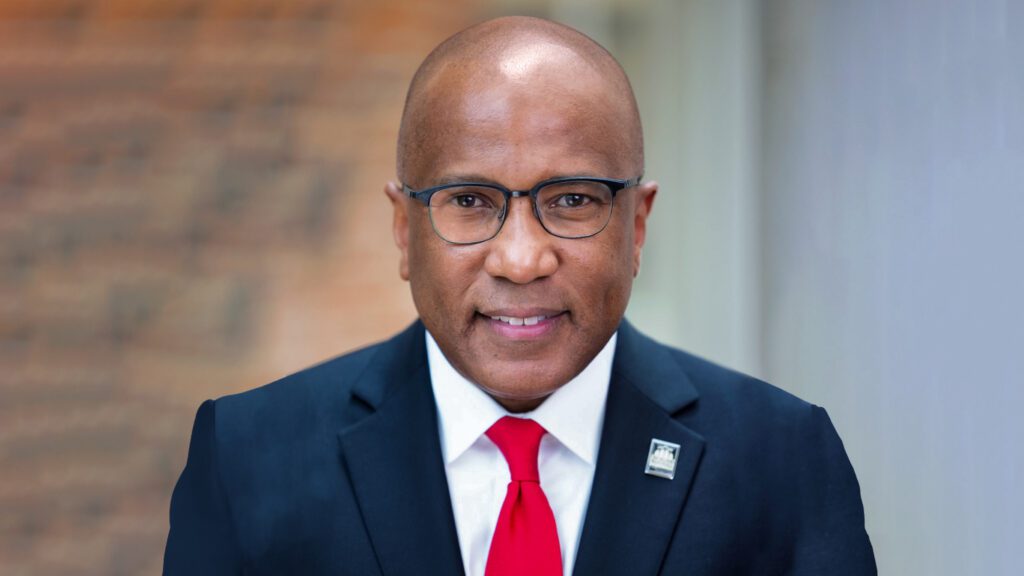
Harry L. Williams is the President & CEO of the Thurgood Marshall College Fund. You can follow him on Twitter @DrHLWilliams
Source: Tennessean