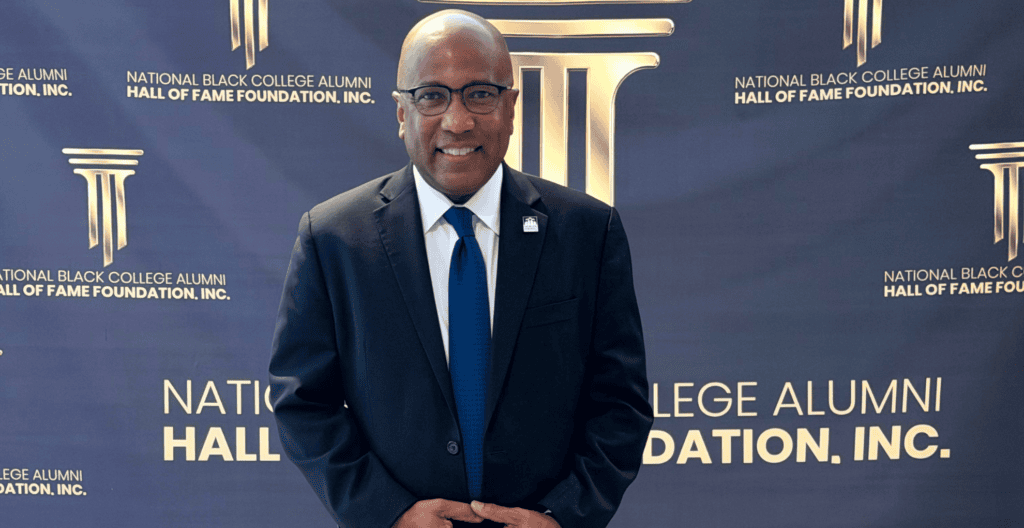
“We, at the Thurgood Marshall College Fund, are both surprised at and disappointed with the proposed level and allocation of infrastructure funding for Historically Black Colleges and Universities (HBCU) contained in the latest draft of the reconciliation bill.
At present, the reconciliation bill proposes to allocate only $2 billion in infrastructure funding for HBCUs and Minority-Serving Institutions (MSIs) alike; a surprisingly limited sum to account for a group of more than 700 institutions of higher education. This proposed limited funding is even more perplexing when one considers the fact that the infrastructure funding in question is specifically derived from the IGNITE HBCU Excellence Act – a bill originally designed exclusively to address the significant infrastructure needs on 101 HBCU campuses, not 700 institutions. Furthermore, given the express purpose of IGNITE, we are troubled by the idea that HBCUs will be competing with non-HBCUs for access to such limited funding. While we certainly do not oppose MSIs receiving their own tranche of infrastructure funding, we strongly believe that it is not in the interest of HBCUs to be forced to compete with MSIs who do not have the substantial deferred maintenance expenses and elemental infrastructure needs of HBCUs, and certainly have not experienced the extensive legacy of underfunding that our institutions have encountered.
Additionally, we are confused as to why there is a prioritization written into this bill for institutions who have received less than $10 million annually in federally funded research. In order for HBCUs to reach the stated goal of establishing our own Research I institutions – one of the implicit goals of IGNITE – we must intentionally invest and build the research capacity of our Research II HBCUs. This prioritization, unfortunately, works in contravention of this objective.
We fundamentally believe that HBCUs should be able to compete on equal footing with other HBCUs for the infrastructure funding being proposed and that the overall pot of funding should be increased by several billions of dollars to meet the research infrastructure, as well as the deferred maintenance and basic infrastructure needs at our institutions.
Notwithstanding our concerns about the current state of affairs, we remain grateful to the founder of the bipartisan HBCU Caucus, Congresswoman Alma Adams for spearheading this effort and being a tireless advocate for HBCUs before Congress. We sincerely hope that leaders in Congress and the White House will follow her lead and work to provide HBCUs with the infrastructure funding they so desperately need to provide the requisite instruction to their students and enable them to be competitive in the higher education marketplace.”
Dr. Harry L. Williams
President & CEO
Thurgood Marshall College Fund